
We reproduce below an article that a supporter of the Marxist World faction submitted to the editorial of Socialism Today in November 2014, but predictably was never published. The article critiques the CWI leaderships’ muddled position on crisis theory and shows how contradictory their position is. The article also focuses on the relationship between the Law of the Tendency of the Rate of Profit to Fall (LTRPF) and the expansion of credit/debt.
We believe this is extremely important, especially given the events that are unfolding in China right now. The Chinese Stock Market has fallen by 30% compared to its peak in June, already wiping off $3.2 trillion of “value”. The China Insurance Regulatory Commission (CIRC) has admitted there is genuine ‘panic selling’ underway, and many are billing this as China’s version of the 1929 crash, which directly preceded the Great Depression in the 1930s. The Chinese government have stepped in to prevent some companies from trading stocks and shares but still investors are panic selling. What is this but simply confirmation of our analysis that the laws of capitalism operate and run wild in the Chinese economy?
If this really is more than a “market correction” in China, then this could be the start of another global crisis on the scale of something bigger than 2008.
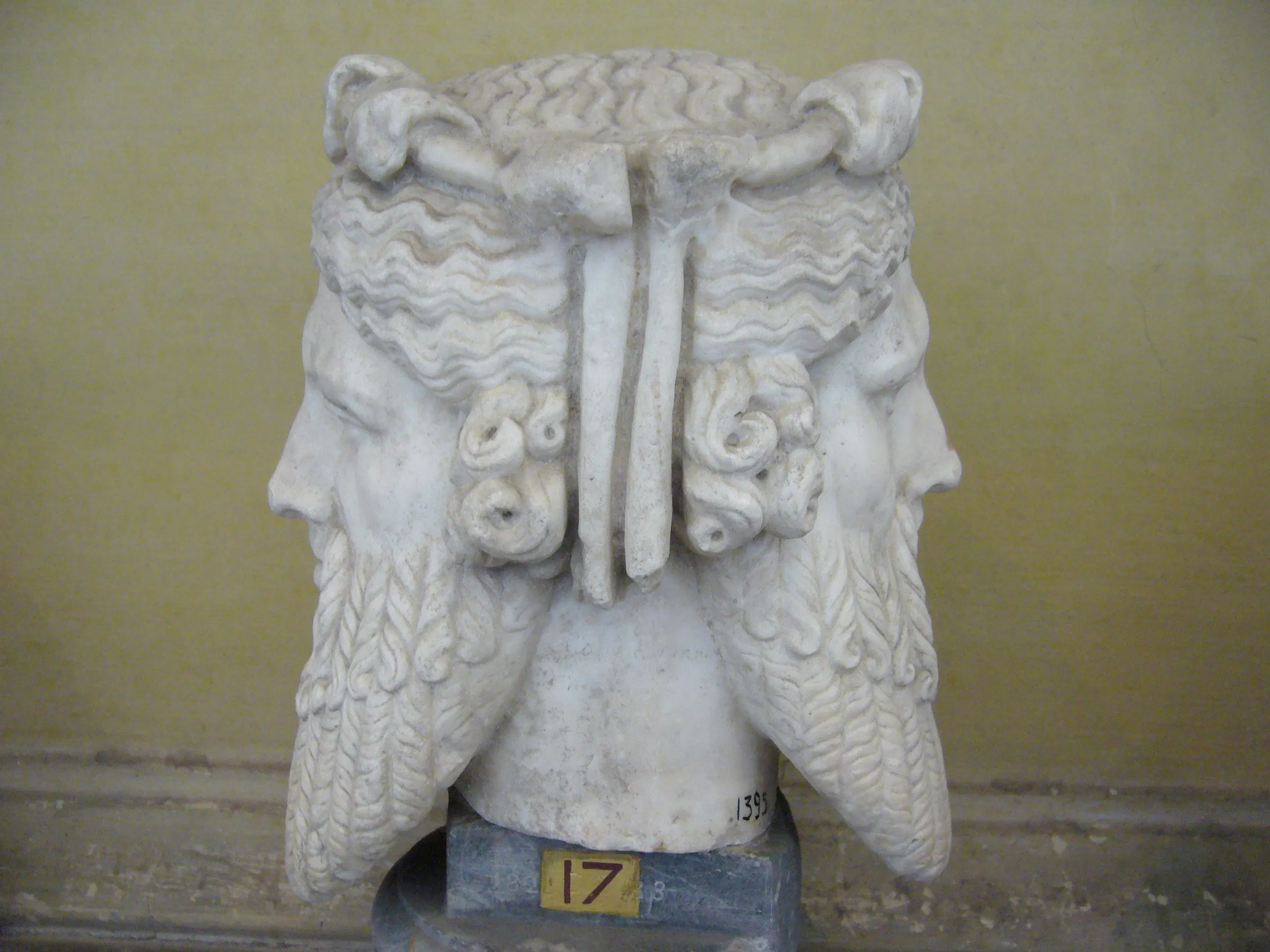
Janus Economics: You Can’t Face Both Ways At The Same Time
For the Roman Janus was the god of beginnings and transitions- and of gates doorways, passages and endings. He is usually depicted as having two faces, since he looks to the future and to the past.
Peter Taaffe’s recent review of Jeremy Rifkin’s “The Zero Marginal Cost Society: the internet of things, the collaborative commons and the eclipse of capitalism” [1] addresses some interesting points. At a high level, the premise of the book is that, as labour productivity increases with the application of new technology, new commodities can be produced more and more cheaply, eventually at a virtually zero additional (or marginal) cost for the capitalist.
As Marx noted, capitalists employ new technology only in order to raise their own individual rate of profit: “No capitalist ever voluntarily introduces a new method of production […] so long as it reduces the rate of profit … [E]very such new method of production cheapens the commodities. Hence, the capitalist sells them originally above their prices of production, or, perhaps, above their value. He pockets the difference between their costs of production and the market-prices of the same commodities produced at higher costs of production.” [2]
However, “As soon as the new production method begins to spread, and thereby to furnish tangible proof that these commodities can actually be produced more cheaply, the capitalists working with the old methods of production must sell their product below its full price of production, because the value of this commodity has fallen, and because the labour-time required by them to produce it is greater than the social average. In one word — and this appears as an effect of competition — these capitalists must also introduce the new method of production, in which the proportion of variable to constant capital has been reduced.” [3] [our emphasis]
The Most Important Law of Political Economy
The substitution of the value of labour-power (from workers) with the value of the new cheaper technology (“dead labour”) in production causes the relative value of constant capital to variable capital to rise (the Organic Composition of Capital). The result is not just that the overall value of the produced commodity declines, but also the surplus value congealed within it, the origin of capitalist profit, also declines. The capitalists try to offset the decline in profit rates through the counter-tendencies that Marx described in chapter 14 of Capital volume 3, such as by increasing the rate of surplus value (exploitation), although ultimately unsuccessfully: “The tendency of the rate of profit to fall is bound up with a tendency of the rate of surplus-value to rise, hence with a tendency for the rate of labour exploitation to rise.” [4]
“But in reality, as we have seen, the rate of profit will fall in the long run.” [5] It is the search for higher profit rates by individual capitalists that dialectically leads to its opposite – the decline in the general rate of profit, “wholly independent of the will of the capitalist.” [6]
This is the basis of Marx’s “most important law of political economy” [7], the Law of the Tendency of the Rate of Profit to Fall (LTRPF), because it shows that capital has limits to its self-expansion and hence challenges the concept that capitalism is eternal and the end point of history; It points to the need to replace it with a superior, planned and rational social order - socialism.
The LTRPF shows how cyclic and secular movements in the general rate of profit constantly threaten the existence of capitalism itself through crises:
“The limitations of the capitalist mode of production come to the surface: 1) In that the development of the productivity of labour creates out of the falling rate of profit a law which at a certain point comes into antagonistic conflict with this development and must be overcome constantly through crises.“ [8] [our emphasis]
In a crisis, the value of capital is destroyed, allowing the rate of profit to be restored to a certain degree, paving the way for another temporary period of growth.
Contradictions
Unfortunately, Peter is not using the LTRPF in the same sense as Marx did, despite his reference to it: “Rifkin unconsciously vindicates Karl Marx – who he approvingly quotes, frequently – on the idea that there is a long-term tendency of the rate of profit to decline. However, there is also a number of ‘counteracting tendencies’ which, Marx explains, can and do delay the fall in the rate of profit, sometimes over a lengthy historical period. Indeed, in the current crisis there is a surfeit of profits – a cash mountain – that from the standpoint of the capitalists can presently find no profitable outlet.”
This paragraph contains, in our opinion, inconsistencies which may not be immediately apparent . Peter asserts the LTRPF is a long-term tendency that happens over a “lengthy historical period.” But how long are these “historical” periods? 5 years? 10 years? 30 years? 100 years?! The decline in the general rate of profit was, like it is now, an empirical fact that was self-evident. Marx’s Law seeks to explain why profit rates tend to fall with relation to the Law of Value, and how this brings about crises.
We can briefly explain the recent 2007/8 crises with reference to Marx’s analysis as follows: The US dot-com bubble crash in 2001 and the destruction of capital value associated with it allowed the US general rate of profit to rebound and rise until mid 2006 [9] where it reached a relative peak and started to once again decline. This decline in the general profit rate slowed the purchase of capital goods, which led to a collapse in the US mass of (pre-tax) profit by more than half, from $1,865 billion in Q3 2006 to $868 billion in Q4 2008 [10]. This collapse in the mass of profits spurred on investors to borrow money and hedge their bets on the fictitious capital values of the stock market, creating the credit/debt bubble (“the so-called plethora of capital” – more on this later) that exploded in the crisis of 2008. The crisis led to a stock market crash and mass bankruptcies, particularly amongst small or less profitable enterprises, allowing solvent investors to reap the gains of purchasing fire-sale assets and devalued capital. In turn, this laid the ground for a relative recovery of the US economy on the basis of cheaper capital investment and thus a higher rate of profit.
So we can see how the cyclic nature of the general rate of profit both explains how crises occur and how they are overcame. However, one of the specific features of the 2008 crisis, a political decision by the ruling class, was the part-socialisation/nationalisation of the banks to prevent them from collapsing. From the point of view of the capitalist mode of production, not enough capital value was purged through the crisis. Therefore, the capitalists are only storing up more problems for the next crisis, which will require an even greater purge of capital value than it would have otherwise.
It is not made clear in Peter’s article why he believes that crises occur. If the movements in the general rate of profit did not lead to the 2007/8 crises, then what did? If it had nothing to do with the rate of profit, then was it simply a happy (or rather unhappy) accident? Was it purely monetary crisis associated with circulation of capital rather than capital value production? It is not clear. Peter feels he can simply point to the existence of “counter-tendencies” and banish the LTRPF to the netherworld without a clear explanation.
Another obvious contradiction is, if the value of commodities tends to decline towards near zero, less surplus value, and thus less profit, can be realised per sale. But if this is the case (which Marx and Peter accept), where have the capitalists’ alleged cash mountains and profits come from?!
Piles of Cash
It is suggested that the existence of a “surfeit of profits – a cash mountain” is a counter-tendency. Firstly, the idea that capitalists are sitting on hoards of money is a fantasy. We have already contributed to several critiques in the previous Members Bulletins showing the vast amounts of debt that US and UK corporations have. In brief, the reason that it appears companies have lots of cash is because interest rates are at an historic low and so borrowing is very cheap. But if one borrows a million pounds, does that make one rich? Of course not – it must be paid off at some point. If the economy is doing well, as indicated by a robust rate of profit, then it is possible that the debt can be paid off. If the economy is performing poorly, then it becomes harder to repay the debt, or indeed impossible, and a string of bankruptcies follows. And so the historical mass of corporate debt and the illusion of “cash piles” is in fact a symptom of the underlying problem with capitalist production – a low general rate of profit.
Secondly, even if the capitalists were not in debt and had genuine capital reserves, this would not in itself make a counter-tendency to the falling rate of profit! Marx makes this clear when he talks about a handful of monopoly capitalists with a large mass of profit acquiring bankrupt smaller businesses: “The rate of profit, i.e., the relative increment of capital, is above all important to all new offshoots of capital seeking to find an independent place for themselves. And as soon as formation of capital were to fall into the hands of a few established big capitals, for which the mass of profit compensates for the falling rate of profit, the vital flame of production would be altogether extinguished. It would die out.” [11] [our emphasis]
If only a handful of monopoly-capitals survive a crisis due to owning a large mass of profit (in spite of a low rate of profit), capitalist production would die out! Marx concludes the paragraph with the simple but important statement: “The rate of profit is the motive power of capitalist production.” [12] [our emphasis]
Furthermore, with regards to the “centralisation of existing capitals in a few hands and a deprivation of many of their capital (to which expropriation is now changed). This process would soon bring about the collapse of capitalist production if it were not for counteracting tendencies, which have a continuous decentralising effect alongside the centripetal one.” [13] [our emphasis]
So within capitalism there are counter-tendencies, regulated by movements in the rate of profit, which check the centralisation of capital and create smaller capitals with higher rates of profit. But simply owning a large mass of capital and profit through centralisation is not in itself a counter-tendency, despite Peter’s assertion.
Economic Trends
Peter makes a telling comment in this paragraph: “One trend is emphasised [by Rifkin]: the colossal effects of technological progress. But Rifkin envisages this developing in a linear fashion. Yet capitalism has never given a finished expression to the economic trends within it, carrying them through to a conclusion. For instance, out of competition can develop monopoly in the domestic market, only for the capitalists to face intensified competition on the world market.” [our emphasis]
The “economic trends” within capitalism, such as the tendency towards centralisation of capital and the LTRPF have been well documented by Marx as the “laws of motion” that govern the capitalist mode of production. It therefore becomes meaningless to claim that capitalism has never fully realised these tendencies. If capitalism ceased to be driven by these tendencies because they reached a “finished expression”, it would no longer be capitalism – we would be living under socialism or communism. This is a pointless statement and creates unnecessary confusion around the falling rate of profit. The inference is that adherence to the LTRPF as the underlying cause of crises implies a belief in the automatic, mechanical collapse of capitalism without the intervention of the proletariat, a final crisis, as the general profit rate hits zero. This is a disappointing assumption as this has never been stated at any time by any member of the CWI or in previous Members Bulletins on the issue.
However, the history of capitalism has shown that the ruling class will resort to fascism and war, even world war, as a last ditch attempt to restore their rate of profit and thus the existence of their system. This will not constitute a final crisis, yet it certainly poses the question of “socialism or barbarism” as capitalism desperately tries to find a way out. Indeed, Marx in the Grundrisse seemed to believe that recurring crises would get increasingly catastrophic: “These contradictions, of course, lead to explosions, crises, in which momentary suspension of all labour and annihilation of a great part of the capital violently lead it back to the point where it is enabled [to go on] fully employing its productive powers without committing suicide. Yet, these regularly recurring catastrophes lead to their repetition on a higher scale, and finally to its violent overthrow.” [14] [our emphasis]
The Stagnation School
The official party position that large corporations with cash mountains have overcome the LTRPF does not derive from Marx but from Baran & Sweezy’s 1966“Monopoly Capital” and the Monthly Review school. In short, Baran & Sweezy believed that modern monopoly capitalism had made Marx’s analysis of “competitive” capitalism, including the Law of Value and the LTRPF, redundant. In stark contrast to Marx and his tendency of profit rates to fall, they believed that monopoly capitalism had a “tendency for the rate of surplus to rise”. Apparently, the problem for the ruling class is that they were drowning in profits but had no “profitable outlets” to invest in. Why wasn’t investment profitable? Because workers’ wages were too low to raise “effective demand” (aka underconsumption theory, which Marx, Engels and Lenin all rejected). Built on top of this anti-Marxist theory was another theory of “financialisation”, which states that all this surplus profit was invested into the financial sector boom in the 1980s onwards, creating inequality, lower wages, lower effective demand and hence lower investment. The outlook for capitalism is therefore stagnation as capitalism gradually drowns in its own surplus value and productive investment tends towards zero. But the only conclusion flowing from this analysis is that the task of the proletariat is to utilise the existing mode of production and redistribute the “surplus”, perhaps through control of the banking system, and then only expropriate capitalist property should they complain.
Additionally, if capitalism tends towards stagnation, why do crises occur? Whereas Marx believed that capitalism was a dynamic system with fluctuations in the rate of profit leading to periods of crises and recovery, the Sweezyites and their “financialisation” theory believes that crises occur due to high credit and low wages. In short, they believe that 2007/8 was a purely monetary crisis due to the over-extension of credit and nothing to do with capitalist production, which was basically healthy. But why then do we need socialism if capitalist value production is sound? The fight for socialism no longer becomes a historical necessity of replacing a dying mode of production, but a purely voluntary feat where we have to convince workers that capitalism is bad and distributes wealth unfairly. We move from primarily critiquing capitalism as a mode of production that contains within it the seeds to its own destruction as expressed by the laws of motion identified by Marx, to solely criticising wealthy individuals like bankers and the rich for hoarding money and being greedy. Redistribution and taxing the rich, not replacing the mode of production through revolution, becomes the aim of “the movement”. This is, unfortunately, what the CWI is ever more adhering to.
Further in the article, Peter does correctly refer to Marx, contradicting the earlier Baran and Sweezy position: “The slaughter of value through an economic recession or slump, which to some extent is happening at the present time, creates the conditions for a higher rate of profit, new fields of investment and a new cycle of growth. But then there is the resistance of the working class to a process which will add considerably to the mass unemployment and penury.” [our emphasis]
Yet as we have previously shown, the Marxist explanation of crisis (due to a falling rate of profit) is at odds with the idea of lack of “profitable outlets” to invest the “ever rising rate of surplus value”! It is a relief to know that at least some of the contributions made in previous Members Bulletins have been belatedly accepted although unacknowledged.
Confused Editorial
We see this act of facing both ways in a recent article by the editorial of The Socialist, “Capitalism: The New Mediocre” [15].
“Stagnation - a long period of low growth - is now the best scenario on offer for world capitalism. The OECD (Organisation for Economic Cooperation and Development) has even calculated that low growth - an average of two-thirds of the current very low rate - will continue for the next 45 years!
We would agree, except that the working class will not put up with a capitalist system which means impoverishment for the majority for that long - a democratic socialist planned economy will be firmly on the agenda before then.”
Officially the party do not and have never employed the term stagnation as a long period of low growth. The form has been adopted (but not the content!) of the critique we made in the document, “What is the Cause of the Current Capitalist Crisis?” [16]
“It is also revealing how the party understand the term “stagnation”. If we mean by stagnation, a period of low growth then that is one thing. However, we think the EC means something else….
What is being outlined here is a decade of prolonged stagnation caused by an excess of profits which are uninvestable. The perspective is one of years of austerity and a capitalism itself that grinds to a standstill.”
The Socialist Editorial appears to agree with the bourgeois economists that growth will continue to stumble along at near zero rates… for 45 consecutive years! In this edition of the paper, crises simply do not exist. It is not accepted that the LTRPF is what causes crises, which in turn purges capital, restores profit rates and leads to higher investment. Unlike Marx, it is clearly expressed that capitalism exists primarily to satisfy consumer demand, and not for self-expansion of value.
So what will stop this 45 year period of capitalist “stagnation” that the Editorial foresees? Simply the working class will not put up with endless austerity and cuts. Exactly what this means, is not clear.
In reality, in the last century we have had three major crises of capitalism. The first was ushered in by the 1929 stock market crash, and sufficient capital value was only destroyed with the mass destruction of World War Two. The next major crisis was in the early 1970s, where the limits to the traditional “national” capitalist production model were shown through the declining profit rates in all the advanced capitalist countries. This was partly, temporally overcome through the reconfiguration of capitalist production and supply chains on a global scale, allowing production to take place in multiple countries where labour and capital costs were lower in an attempt to raise the rate of profit. In the advanced capitalist countries, the ruling class reoriented the economies from surplus value production to surplus value appropriation and distribution through the service sector, particularly finance (i.e. to distribute and appropriate the surplus value now primarily (although not solely) created and extracted from places in Asia, Africa etc).
However, the end of the 90’s saw the Asian Currency Crisis, the dot-com crash and more recently the 2007/8 crisis. All of these have been overcome primarily through the extension of debt, both corporate and public debt. This mass of fictitious capital value, as stated previously, is a symptom of a low general rate of profit in the economy. The low, or indeed near zero, rates of interests throughout the advanced capitalist countries, along with the threat of deflation (a fall in prices), are also signs of a low rate of profit. It’s not profitable to invest in production either directly or indirectly, so all investors can do is gamble on the stock exchange and money markets, leading to more bubbles and subsequent crashes and crises. As debt builds up, it means that the next crisis must purge even more capital value (real and particularly fictitious) in order to lay the basis for a period of recovery.
The change of the official Party position comes once again in the next paragraph: “In recent weeks, however, there has been a renewed wave of panic in the financial markets at the unfolding of a new stage of the economic crisis that began in 2007. Fears are mounting that stagnation might be too rosy a prognosis for the world economy.” [our emphasis]
So after agreeing that stagnation will proceed for 45 years, the Editorial now contradicts itself and raises the possibility of a 2008-style crash! It is almost as if the article were written by two different people, or two groups of people with opposing views. It seems that the Party position faces both ways at the same time in an attempt to put an each way bet on the likelihood of a crash and the possibility and further low growth. These contradictory statements are at pains to prove that they are both correct at the same time correct, so whatever happens it is possible to say either “…as we explained October 29 2014, low growth has persisted.”, or “…as we explained on October 29th 2014, stagnation was too rosy a prognosis for the world economy.” Party members and workers do not ask for a blunt prediction. We ask for an explanation of the underlying processes in the world economy. But further we ask for the alternative position on the how and why capitalism moves into crisis, legitimately sketched out in previous Members Bulletins, to be made available on our website.
Peter’s welcome use of the phrase “slaughter of value” is uncharacteristic of his previous writings. The word “value” had practically disappeared from the Party lexicon. But phrases such as these have been partially resuscitated, precisely because in our opinion there has been a step away from Marx’s theory of value and a step towards Sweezy, the Monthly Review school. The position of the Party leadership has partially shifted to formally acknowledge some of the ideas raised in the recent debates. We welcome this! But this change represents something more. There were ziggs and now they are zaggs! Does this change in positions represent different tendencies or outlooks within the leadership? This is permissible. The sky will not fall in. If there are differences of opinion we should not fear an open debate.
Our leadership seem to be moving tentatively towards a correct analysis of the crisis and thankfully seem to lack confidence in their original position. Nevertheless why has the party gone back on the original idea for a debate with Andrew Kliman, when this had been agreed for Socialism 2013? The Party failed to arrange anything for Socialism 2014. What is there to be afraid of if this academic is completely cut off from the working class? If that is the case, a debate should be arranged for members to compare and contrast the two approaches to Marx’s theory on crisis.
Fictitious Capital Value
Returning to the article, the editorial states: “The US, while it is a declining power, still remains the most powerful economy in the world. Yet the return to growth (very low growth) of the US economy has not been sufficient to lift the rest of the world out of crisis. This is despite the vast sums of money that have been pumped into the US financial system since the economic crisis began.”
Quantitative Easing has certainly pumped money into the US financial system. All of which, of course, is essentially printing money, creating fictitious capital value! The Editorial state: “Yet, in a condemnation of modern capitalism, these huge sums being pumped into the economy have not resulted in a growth in investment.”
These “huge sums” of money held by the banks are an illusion. They are what Marx referred to as the “plethora of capital - an expression used only with reference to the interest-bearing capital, i.e., moneyed capital”. [17]
“This plethora of capital arises from the same causes as those which call forth relative over-population, and is, therefore, a phenomenon supplementing the latter, although they stand at opposite poles — unemployed capital at one pole, and unemployed worker population at the other”. [18] [our emphasis]
This over-population that Marx talks about is, of course, the crisis (of over-production). Marx is saying that the falling rate of profit, which leads to a crisis, also brings about an expansion of credit/debt “money capital”. In Chapters 30-32 of Capital volume 3, Marx makes the distinction between this money-capital, and real capital:
“In so far as we have hitherto considered the peculiar form of accumulation of money-capital and of money wealth in general, it has resolved itself into an accumulation of claims of ownership upon labour….By means of these facts, whereby even an accumulation of debts may appear as an accumulation of capital, the height of distortion taking place in the credit system becomes apparent…
“Titles of ownership to public works, railways, mines, etc., are indeed, as we have also seen, titles to real capital. But they do not place this capital at one’s disposal. It is not subject to withdrawal. They merely convey legal claims to a portion of the surplus-value to be produced by it. But these titles likewise become paper duplicates of the real capital; it is as though a bill of lading were to acquire a value separate from the cargo, both concomitantly and simultaneously with it. They come to nominally represent non-existent capital. For the real capital exists side by side with them and does not change hands as a result of the transfer of these duplicates from one person to another. They assume the form of interest-bearing capital, not only because they guarantee a certain income, but also because, through their sale, their repayment as capital-values can be obtained. To the extent that the accumulation of this paper expresses the accumulation of railways, mines, steamships, etc., to that extent does it express the extension of the actual reproduction process — just as the extension of, for example, a tax list on movable property indicates the expansion of this property. But as duplicates which are themselves objects of transactions as commodities, and thus able to circulate as capital-values, they are illusory, and their value may fall or rise quite independently of the movement of value of the real capital for which they are titles. Their value, that is, their quotation on the Stock Exchange, necessarily has a tendency to rise with a fall in the rate of interest — in so far as this fall, independent of the characteristic movements of money-capital, is due merely to the tendency for the rate of profit to fall; therefore, this imaginary wealth expands, if for this reason alone, in the course of capitalist production in accordance with the expressed value for each of its aliquot parts of specific original nominal value.” [19] [our emphasis]
Marx makes several important points in the above passages. Firstly, the capitalists do not distinguish between “claims on value” (e.g. mortgages, shares and financial derivatives) and real capital value - both are lumped in as assets on the capitalists’ balance sheets. Yet capital can ultimately only expand on the basis of real value. The British New Economics Foundations claim that interest-bearing capital now constitutes 97% of the money supply! [20] As Marx predicted, capital has become a barrier to its own self-expansion. Unable to produce enough surplus value to expand, it has become increasingly reliant on debt, leading to financial bubbles and violent crashes.
Secondly, fictitious capital is dependent on real capital in order to grant its owner a return on investment (interest rate). As the rate of profit tends to fall, so does the rate of interest, further causing the expansion of “imaginary wealth”! Marx also explains those imaginary cash hoards that appear after a crisis:
“Not every augmentation of loanable money-capital indicates a real accumulation of capital or expansion of the reproduction process. This becomes most evident in the phase of the industrial cycle immediately following a crisis, when loan capital lies around idle in great quantities. At such times, when the production process is curtailed (production in the English industrial districts was reduced by one-third after the crisis of 1847), when the prices of commodities are at their lowest level, when the spirit of enterprise is paralysed, the rate of interest is low, which in this case indicates nothing more than an increase in loanable capital precisely as a result of contraction and paralysation of industrial capital.” [21] [our emphasis]
And again:
“It follows from the above that commodity-capital, during crises and during periods of business depression in general, loses to a large extent its capacity to represent potential money-capital. The same is true of fictitious capital, interest-bearing paper, in so far as it circulates on the stock exchange as money-capital. Its price falls with rising interest. It falls, furthermore, as a result of the general shortage of credit, which compels its owners to dump it in large quantities on the market in order to secure money. It falls, finally, in the case of stocks, partly as a result of the decrease in revenues for which it constitutes drafts and partly as a result of the spurious character of the enterprises which it often enough represents. This fictitious money-capital is enormously reduced in times of crisis, and with it the ability of its owners to borrow money on it on the market. However, the reduction of the money equivalents of these securities on the stock exchange list has nothing to do with the actual capital which they represent, but very much indeed with the solvency of their owners.” [22] [our emphasis]
In a recent paper by an economist we would have big political differences with entitled “The Profit Rate in the Presence of Financial Markets : A Necessary Correction” [23],it nevertheless showed that, by adhering to the Marxist definition of fictitious capital and therefore excluding the profits created by the financial sector as surplus value, the general rate of profit in both the UK and US reached its lowest post-war point in 2007.. Also, both rates of profit clearly show a downward trend since WW2, and still remain historically at their lowest point. These types of statistics, which would not have been available in Marx’s time, clearly validate and vindicate Marx’s theory.
Cash Piles or Huge Debts?
After declaring that capitalism has huge amounts of money stashed in the bank, the Editorial then do another about-face and decides there is now… too much debt!
“Deflation is a drag on growth because it makes debt more expensive and leads consumers to postpone purchases in the expectation that prices will be lower at a later date. Given the huge debts throughout the world economy this is a nightmare scenario for capitalism.” [our emphasis]
How can capitalism simultaneously have mountains of profits waiting to be invested, yet have “huge debts”? And please no appeals to dialectics. Only the application of a Marxist analysis and the differentiation between appearance (piles of cash) and essence (fictitious capital value) can solve this riddle.
References
[1] http://www.socialistworld.net/doc/6952
[2] Marx, Capital 3 Chapter 15
[3] ibid
[4] Marx, Capital 3 Chapter 14
[5] Marx, Capital 3 Chapter 13
[6] Marx, Capital 3 Chapter 15
[7] Marx, Grundrisse Chapter 15
[8] Marx, Capital 3 Chapter 15
[9] http://thenextrecession.wordpress.com/2012/11/25/the-us-rate-of-the-profit-the-latest/
[10] http://www.karlmarx.net/marx-crisis-theory/permanentcrisis
[11] Marx, Capital 3 Chapter 15
[12] ibid
[13] ibid
[14] Marx, Grundrisse Chapter 15
[15] http://www.socialistparty.org.uk/issue/831/19586/29-10-2014/capitalism-the-new-mediocre
[16] Members Bulletin 2, http://marxistworld.net/2015/03/the-cause-of-capitalist-crises-rate-of-profit-socialist-partycwi-debate-documents/
[17] Marx, Capital 3 Chapter 30
[18] Marx, Capital 3 Chapter 15
[19] Marx, Capital 3 Chapter 30
[20] http://www.neweconomics.org/publications/entry/where-does-money-come-from
[21] Marx, Capital 3 Chapter 30
[22] ibid
[23] https://thenextrecession.files.wordpress.com/2013/02/freeman13.pdf

Leave a Comment